


If you’ve been researching ways to lose stubborn fat, speed up post-workout recovery, or simply feel more vital and lean, you’ve likely encountered the growing conversation around peptide therapy for weight loss and recovery. What was once a niche area of sports medicine and anti-aging research has moved firmly into mainstream functional wellness — and for good reason.
Peptides are short chains of amino acids — the same building blocks that form proteins — and they act as incredibly precise messengers inside your body. When specific peptides are introduced therapeutically, they can trigger fat-burning pathways, stimulate natural growth hormone production, reduce inflammation, and accelerate tissue repair. The science is compelling, the results are measurable, and more people than ever are turning to medically supervised peptide therapy for weight loss and recovery as a cornerstone of their health transformation.
In this guide, we break down exactly how peptide therapy works, which peptides are most effective for weight loss and recovery, what a real treatment protocol looks like, and who makes an ideal candidate. Whether you’re completely new to this or comparing your options before booking a consultation, this is your definitive resource.
72%
of patients report measurable fat loss within 8–12 weeks of peptide therapy
3–5×
faster tissue recovery reported with BPC-157 and TB-500 protocols
15–20%
average reduction in visceral fat with semaglutide-based peptide protocols
FDA
approved several peptides for weight management as of 2024
What Is Peptide Therapy for Weight Loss and Recovery?
At its most fundamental level, peptide therapy for weight loss and recovery involves the targeted administration of bioidentical or synthetic peptide compounds to influence specific physiological processes. Unlike broad-spectrum medications, peptides communicate with your body through highly specific receptor pathways, meaning the effects are targeted and the side-effect profiles are generally favorable when administered correctly.
Your body already produces hundreds of peptides naturally. Insulin is a peptide. So is oxytocin, glucagon, and growth hormone-releasing hormone (GHRH). When natural peptide production declines — as it does with age, chronic stress, poor sleep, or metabolic dysfunction — supplementing with therapeutic peptides can restore signaling that your body has lost.
How Peptides Differ from Hormones and Steroids
A common misconception is that peptide therapy is similar to anabolic steroid use or traditional hormone replacement therapy. The distinction is critical. Steroids directly replace or add hormones at supraphysiological levels. Many peptides, by contrast, work upstream — they stimulate your own glands to produce hormones more efficiently, essentially restoring the volume on your body’s natural signals rather than bypassing them entirely.
This is why the recovery and fat-loss benefits of peptide therapy tend to feel more natural, sustain longer, and carry a significantly reduced risk of the hormonal suppression associated with synthetic hormone use.
The Best Peptides for Weight Loss and Recovery
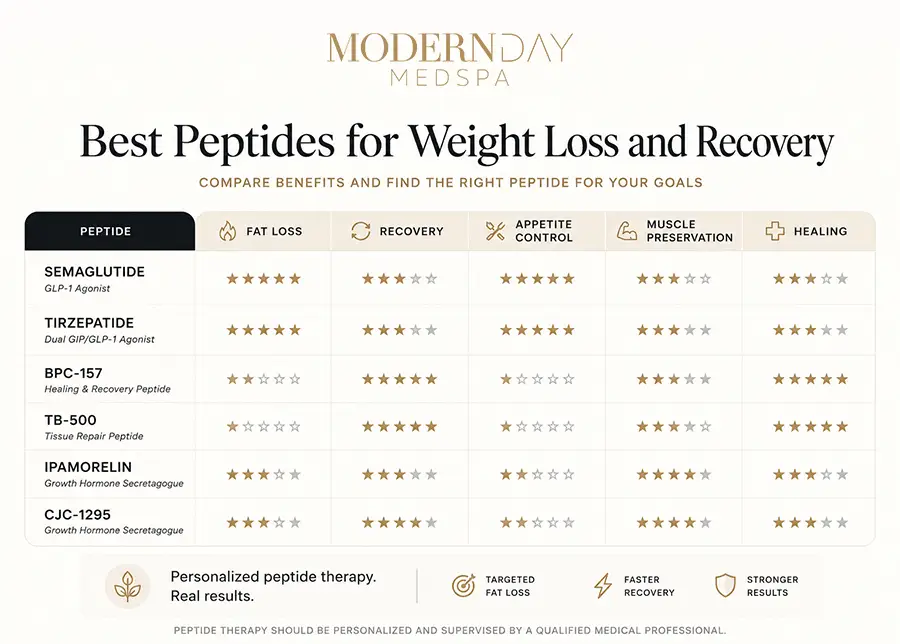
Not all peptides serve the same purpose. Understanding the key compounds — and what each one does — is essential for making informed decisions about peptide therapy for weight loss and recovery. Below is a breakdown of the most clinically relevant options used today.
Semaglutide and Tirzepatide (GLP-1 / GIP Agonists)
These are arguably the most discussed peptides in mainstream medicine right now. Semaglutide mimics glucagon-like peptide-1 (GLP-1), a gut hormone that regulates appetite, slows gastric emptying, and improves insulin sensitivity. Clinical trials published in the New England Journal of Medicine demonstrated that patients using semaglutide lost an average of 14.9% of body weight over 68 weeks — a result that rivals many surgical interventions.
Tirzepatide takes this further by acting on both GLP-1 and GIP receptors simultaneously, producing even more pronounced weight reduction and metabolic benefits. For candidates where metabolic dysfunction, insulin resistance, or significant weight loss goals are the priority, these GLP-1-based peptides are often the first line of discussion.
Sermorelin and CJC-1295 / Ipamorelin (Growth Hormone Secretagogues)
These peptides stimulate the pituitary gland to produce and release more natural growth hormone. The fat-loss and recovery benefits are profound: growth hormone increases lipolysis (the breakdown of stored fat), preserves lean muscle during caloric restriction, improves sleep quality, and dramatically accelerates tissue repair after injury or exercise.
CJC-1295 and Ipamorelin are frequently combined because they work through complementary pathways — CJC-1295 extends the duration of growth hormone release while Ipamorelin provides a clean, targeted pulse without the cortisol or hunger side effects of older compounds like GHRP-6.
BPC-157 (Body Protection Compound-157)
BPC-157 is one of the most remarkable recovery peptides in clinical use. Originally derived from a protective protein in the stomach, it has demonstrated powerful systemic healing effects — including accelerated tendon, ligament, and muscle repair; reduction of inflammation; gut healing; and even neurological protection. Athletes and post-surgical patients using BPC-157 as part of a peptide therapy for weight loss and recovery protocol frequently report returning to training significantly faster than expected.
TB-500 (Thymosin Beta-4)
TB-500 promotes the upregulation of actin, a protein essential for cell migration and tissue regeneration. In practical terms, this means faster healing from soft tissue injuries, reduced scar formation, improved flexibility, and lower systemic inflammation — a critical factor for anyone whose weight-loss journey involves regular physical training. TB-500 and BPC-157 are often stacked together for synergistic recovery outcomes.

| PEPTIDE | PRIMARY BENEFIT | BEST FOR | TYPICAL PROTOCOL |
|---|---|---|---|
|
Semaglutide |
Appetite suppression, fat loss |
Significant weight reduction goals |
Weekly SC injection |
|
Tirzepatide |
Dual GLP-1/GIP action, metabolic reset |
Obesity, insulin resistance |
Weekly SC injection |
|
Sermorelin / CJC-1295 |
Growth hormone stimulation, fat metabolism |
Body composition, anti-aging |
Nightly SC injection |
|
Ipamorelin |
Clean GH pulse, lean mass preservation |
Fat loss while maintaining muscle |
Daily or nightly injection |
|
BPC-157 |
Tissue healing, inflammation reduction |
Injury recovery, gut health |
Daily SC or oral |
|
TB-500 |
Cell regeneration, flexibility |
Soft tissue injuries, training recovery |
2× weekly SC injection |
Ready to Explore Peptide Therapy?
Our medical team specializes in personalized peptide therapy for weight loss and recovery. Schedule a no-obligation consultation and get a protocol tailored to your body and goals.
How Peptide Therapy for Weight Loss and Recovery Actually Works
Understanding the mechanism helps set realistic expectations and appreciation for why peptide therapy is different from a simple diet pill or crash program. The following pathways explain the core science behind peptide therapy for weight loss and recovery.
Metabolic Pathway Activation
GLP-1 receptor agonists like semaglutide reduce appetite by acting on the hypothalamus — the brain region responsible for hunger signals. They simultaneously slow the rate at which food leaves the stomach, extending feelings of fullness. Over time, this creates a natural caloric deficit without the white-knuckling associated with willpower-based dieting.
Growth hormone secretagogues (like CJC-1295/Ipamorelin) take a different approach: rather than suppressing hunger, they raise the body’s metabolic rate and shift it into a fat-preferential state. More growth hormone in circulation means your body preferentially burns fat for energy, especially during sleep when GH naturally peaks.
Inflammation Reduction and Its Impact on Fat Storage
Chronic low-grade inflammation is one of the most underappreciated drivers of stubborn fat — particularly around the abdomen. Elevated inflammatory markers like IL-6 and TNF-alpha create insulin resistance, which pushes the body toward fat storage rather than fat burning. BPC-157 and TB-500 both demonstrate significant anti-inflammatory activity, helping break this cycle and making other weight-loss interventions more effective.
Research published through the National Institutes of Health’s PubMed Central documents BPC-157’s systemic anti-inflammatory and regenerative properties across numerous tissues, lending scientific credibility to its wide clinical application.
Sleep Optimization and the Growth Hormone Connection
One of the underappreciated aspects of peptide therapy for recovery is its impact on sleep architecture. Growth hormone secretagogues increase deep slow-wave sleep — the phase during which most physical repair and metabolic regulation occurs. Patients on Ipamorelin protocols consistently report improved sleep quality within weeks, which itself accelerates fat loss, reduces cortisol, and speeds recovery between workouts.
Explore Related Topics on Our Site
- BHRT for Menopause Weight Gain: Why Hormones Make Losing Weight Harder After 40
- Medical Weight Loss Franklin Park IL: Semaglutide & GLP-1 Guide
- Med Spa Secrets to Sustainable Weight Loss Without Crash Diets
- Weight loss services
What to Expect from a Peptide Therapy for Weight Loss and Recovery Protocol
One of the most important things to understand is that peptide therapy for weight loss and recovery is not a one-size-fits-all intervention. A well-designed protocol considers your baseline labs, medical history, body composition, lifestyle, and goals. Here is what a typical journey looks like from start to results.
Initial Consultation and Lab Work
Before any peptide is prescribed, a comprehensive evaluation is essential. This includes a review of fasting glucose, insulin levels, complete hormone panel (including IGF-1 for growth hormone status), thyroid function, inflammatory markers, and body composition analysis. This baseline data allows the prescribing clinician to select the most appropriate peptides, doses, and delivery methods for your specific physiology.
Weeks 1–4: Foundation and Adaptation
The first month is largely about adaptation. GLP-1-based protocols typically begin at low doses to allow the digestive system to adjust and minimize nausea. Growth hormone secretagogues begin producing sleep and energy improvements quickly, often within the first 2–3 weeks. Most patients don’t see dramatic scale changes in this period, but body composition begins shifting — muscle is preserved or slightly gained while fat oxidation increases.
Weeks 4–12: Active Transformation
This is where the measurable results of peptide therapy for weight loss and recovery become visible. Patients on GLP-1 protocols typically lose 1–2 pounds per week when combined with appropriate nutrition. Growth hormone secretagogue users see improvements in body composition, energy, recovery time, and often skin quality. Recovery peptides like BPC-157 show their most dramatic results in this window for anyone dealing with lingering soft tissue injuries.
Months 3–6: Optimization and Maintenance
Protocols are adjusted based on follow-up labs and progress assessments. Some peptides are cycled to prevent receptor desensitization. Patients who have reached their primary goals may transition to lower maintenance doses, while those with more ambitious targets continue active protocols. Long-term success is supported by ongoing metabolic health education and lifestyle integration.
Who Is a Good Candidate for Peptide Therapy for Weight Loss and Recovery?
Peptide therapy is not only for elite athletes or the severely obese. The ideal candidate for peptide therapy for weight loss and recovery tends to fall into one or more of the following profiles:
- The metabolically resistant individual — someone who follows a reasonable diet and exercises consistently but cannot seem to lose the last 15–30 pounds or reduce visceral fat
- The post-injury athlete or active professional — someone whose training is hampered by chronic soft tissue issues, slow healing, or persistent inflammation
- The aging adult — anyone 35 and over who notices declining energy, slower recovery, reduced muscle mass, or expanding waistline despite no significant lifestyle changes
- The post-bariatric or weight-loss plateau patient — someone who has lost weight through other means but hit a stubborn plateau requiring metabolic support
- The longevity-focused individual — someone who views peptide therapy not as a quick fix but as a sophisticated, science-backed tool for long-term health optimization
Important note: Peptide therapy is a prescription medical treatment. It must be administered under the supervision of a licensed healthcare provider who has evaluated your complete medical history and current lab work. Sourcing peptides outside of a regulated medical practice — from unvetted online vendors — poses significant safety risks and legal consequences.
Safety Profile and Potential Side Effects of Peptide Therapy
When prescribed and monitored by a qualified medical provider, peptide therapy for weight loss and recovery maintains an excellent safety profile relative to other medical interventions for obesity and performance optimization. That said, informed patients are safer patients.
Common and Manageable Side Effects
- GLP-1 agonists: Nausea, mild constipation, or reduced appetite in the early weeks — almost always dose-dependent and resolved by titrating slowly
- Growth hormone secretagogues: Temporary water retention, tingling sensations, vivid dreams, and transient blood glucose elevation — all typically mild and short-lived
- BPC-157 / TB-500: Injection site reactions in some individuals; extremely rare systemic side effects at therapeutic doses
Who Should Avoid Peptide Therapy
Certain individuals are not good candidates, including those with active malignancies (given GH-stimulating peptides’ theoretical interaction with cancer cell growth), pregnant or breastfeeding women, individuals with personal or family history of medullary thyroid carcinoma (for GLP-1 agonists), and those with unmanaged psychiatric conditions that may be complicated by weight and body-image interventions. A thorough medical intake with your prescribing provider will identify any contraindications specific to you.
Combining Peptide Therapy with Other Wellness Strategies
Peptide therapy for weight loss and recovery delivers its best outcomes when integrated within a broader wellness framework. The following synergies are well-supported by clinical observation and growing research:
Strength Training and Peptides
Growth hormone secretagogues paired with resistance training create a powerful anabolic and lipolytic environment. The elevated GH from peptide therapy amplifies the muscle-building and fat-burning signals generated by lifting, while reducing the recovery time between sessions. Patients on this combination frequently report progressing in strength faster than they ever did before, even at older ages.
Nutrition Optimization
Peptides are not a substitute for sound nutrition — they are an accelerator on top of it. A protein-sufficient, anti-inflammatory diet (emphasizing whole foods, lean proteins, vegetables, and healthy fats while minimizing ultra-processed foods and excess sugar) creates the metabolic substrate that peptide therapy amplifies. Conversely, a poor diet will significantly blunt peptide outcomes, particularly with GLP-1 therapy where the mechanism depends partly on caloric deficit.
Sleep Hygiene
Since many peptides — particularly growth hormone secretagogues — do their most significant work during sleep, optimizing sleep quality multiplies results. This means prioritizing 7–9 hours per night, maintaining consistent sleep and wake times, minimizing blue light exposure in the evening, and keeping bedroom temperature cool. Many patients report that the sleep-improving effects of Ipamorelin alone make the therapy worthwhile, with all other benefits building on that foundation.
Start Your Peptide Therapy Journey Today
Complete the form below and our clinical team will reach out within one business day to schedule your personalized consultation for peptide therapy for weight loss and recovery.
The Bottom Line on Peptide Therapy for Weight Loss and Recovery
Peptide therapy for weight loss and recovery represents one of the most significant advances in personalized medicine over the past decade. It works not by forcing your body into an unnatural state, but by restoring and amplifying the precise biochemical signals that govern how you burn fat, build and preserve muscle, heal from injury, and regulate appetite.
The science is robust. The results — when administered correctly and supported by healthy lifestyle habits — are clinically meaningful and often transformative. But the keyword is “correctly.” The difference between life-changing results and wasted money (or worse, harm) comes down to the quality of the medical supervision, the accuracy of your initial evaluation, and the ongoing monitoring that allows your protocol to evolve with you.
At Modern Day Med Spa, our approach to peptide therapy integrates evidence-based medicine with a genuinely personalized understanding of each patient’s biology, lifestyle, and goals. If you’re ready to explore whether peptide therapy for weight loss and recovery is right for you, the first step is a conversation with our clinical team.
Quick Reference — Key Takeaways:
- Peptide therapy uses precise amino acid chains to restore natural fat-burning and healing signals
- GLP-1 agonists (semaglutide, tirzepatide) are the most effective for significant weight reduction
- Growth hormone secretagogues (CJC-1295, Ipamorelin) optimize body composition and recovery
- BPC-157 and TB-500 are the gold standard for injury repair and inflammation reduction
- Results are most profound when combined with resistance training, sound nutrition, and quality sleep
- All peptide therapy must be prescribed and supervised by a licensed medical professional