


Do you wake up exhausted no matter how much you sleep? Do you feel wired at night but completely drained during the day? If this sounds familiar, you may be experiencing adrenal fatigue and cortisol imbalance — a growing concern that affects millions of people navigating the demands of modern life. In this guide, we break down everything you need to know: what causes this condition, how to recognize it, and — most importantly — how to treat it effectively.
What Is Adrenal Fatigue and Cortisol Imbalance?
The adrenal glands are two small, triangular organs that sit atop your kidneys. Despite their size, they are incredibly powerful — responsible for producing hormones that regulate your stress response, metabolism, immune function, and blood pressure. The most important of these is cortisol, often called the “stress hormone.”
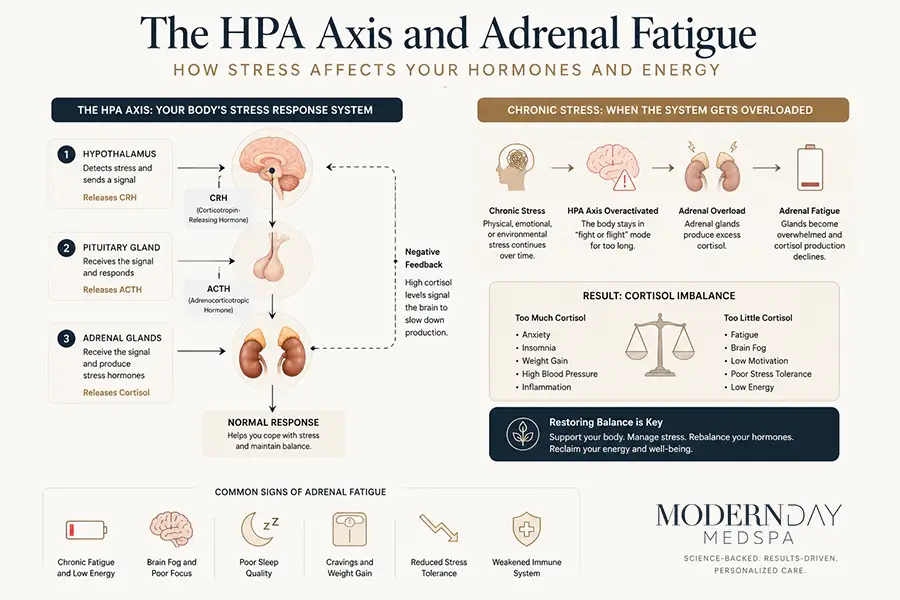
Under normal circumstances, cortisol follows a natural daily rhythm: high in the morning to help you wake up and stay alert, gradually declining throughout the day, and reaching its lowest point at night to allow for restorative sleep. When this rhythm is disrupted — either through chronic stress, poor lifestyle habits, or underlying health issues — you experience what practitioners refer to as adrenal fatigue and cortisol imbalance.
It is worth noting that “adrenal fatigue” as a specific clinical diagnosis remains debated in conventional medicine. However, the concept of HPA axis dysfunction (hypothalamic-pituitary-adrenal axis) is well-recognized and describes the same cascade of hormonal dysregulation. Whether your doctor calls it adrenal fatigue or HPA axis dysfunction, the lived experience is very real and the treatment approaches are remarkably similar.
Adrenal Fatigue and Cortisol Imbalance: Understanding the HPA Axis
The HPA axis is your body’s central stress response system. When your brain perceives a threat — physical or psychological — it signals the adrenal glands to release cortisol. This is healthy and necessary in short bursts. The problem arises when stress becomes chronic: the system stays “on” too long, cortisol regulation breaks down, and the result is a state of cortisol imbalance that disrupts nearly every system in your body.
Adrenal Fatigue and Cortisol Imbalance Symptoms You Should Not Ignore
The symptoms of adrenal fatigue and cortisol imbalance are wide-ranging and often mistaken for other conditions like depression, thyroid disorders, or simple overwork. Below are the most common warning signs:
⚡ Persistent Fatigue
Feeling exhausted even after a full night’s sleep; difficulty getting out of bed in the morning.
🌙 Sleep Disruption
Trouble falling or staying asleep; feeling “wired but tired” at night due to elevated evening cortisol.
🧠 Brain Fog
Difficulty concentrating, poor memory, mental cloudiness, and reduced cognitive performance.
🍬 Sugar & Salt Cravings
Intense cravings for salty or sweet foods as the body tries to compensate for hormonal shifts.
😰 Anxiety & Irritability
Heightened emotional reactivity, increased anxiety, and low stress tolerance.
⚖️ Weight Changes
Unexplained weight gain, especially around the abdomen, or difficulty losing weight despite effort
Less Obvious Adrenal Fatigue and Cortisol Imbalance Symptoms
Beyond the hallmark signs, many patients also experience:
- Frequent illness and a compromised immune system
- Low blood pressure and dizziness upon standing (orthostatic hypotension)
- Reduced libido and hormonal disruptions (estrogen, progesterone, testosterone)
- Digestive issues including bloating, IBS-like symptoms, and food sensitivities
- Skin problems such as dryness, eczema, or increased sensitivity
- Afternoon energy crashes, typically between 2–4 PM
- Feeling better after eating (blood sugar instability linked to cortisol)
“Cortisol imbalance doesn’t just make you tired — it quietly disrupts the hormonal symphony that governs your entire body. The earlier it’s addressed, the easier the road to recovery.”
— Modern Day Med Spa Wellness Team
Root Causes of Adrenal Fatigue and Cortisol Imbalance
Understanding what drives adrenal fatigue and cortisol imbalance is the first step toward lasting recovery. The most common contributing factors include:
- Chronic psychological stress — Work pressure, relationship conflict, financial anxiety, and emotional trauma are among the leading drivers.
- Poor sleep quality or quantity — Cortisol is tightly regulated by your circadian rhythm; disrupted sleep creates a vicious cycle of hormonal dysregulation.
- Inflammatory diet — Excessive sugar, refined carbohydrates, caffeine, and alcohol all stress the adrenal system.
- Overtraining and under-recovery — Intense, frequent exercise without adequate rest can exhaust the adrenals over time.
- Underlying infections or illness — Chronic infections (e.g., Epstein-Barr virus, Lyme disease) place sustained demands on the adrenal glands.
- Toxin exposure — Heavy metals, mold, and environmental chemicals can disrupt the HPA axis.
- Nutritional deficiencies — Low levels of Vitamin C, B5, B6, magnesium, and zinc impair cortisol production and regulation.
Is Cortisol Imbalance Affecting Your Quality of Life?
Our expert team at Modern Day Med Spa specializes in comprehensive hormone testing and personalized wellness plans. Don't wait for your symptoms to worsen — take action today.
How Is Adrenal Fatigue and Cortisol Imbalance Diagnosed?
Diagnosis begins with a thorough clinical history and a comprehensive review of your symptoms. Because standard blood tests often fall short of detecting subclinical cortisol dysregulation, we rely on more precise testing methods:
| TEST TYPE | WHAT IT MEASURES | WHY IT MATTERS |
|---|---|---|
|
4-Point Salivary Cortisol |
Cortisol levels at 4 points throughout the day |
Reveals your full cortisol curve and identifies where the pattern breaks down |
|
DUTCH Test (Dried Urine) |
Cortisol, cortisone, sex hormones & metabolites |
Gold-standard for comprehensive adrenal and hormone assessment |
|
Morning Serum Cortisol |
Peak cortisol at wake time |
Rules out Addison’s disease and severe adrenal insufficiency |
|
DHEA-S Levels |
Dehydroepiandrosterone sulfate |
DHEA often declines alongside cortisol in adrenal fatigue |
|
Thyroid Panel |
TSH, Free T3, Free T4, Reverse T3 |
Cortisol imbalance commonly co-occurs with thyroid dysfunction |
Adrenal Fatigue and Cortisol Imbalance Treatment: A Comprehensive Approach
Effective adrenal fatigue and cortisol imbalance treatment is never one-size-fits-all. The most successful protocols combine lifestyle modification, targeted nutrition, stress management, and — when appropriate — medical intervention. Here is a breakdown of the most evidence-supported approaches:
1. Lifestyle Optimization for Adrenal Fatigue and Cortisol Imbalance
The foundation of recovery starts with your daily habits:
- Prioritize sleep: Aim for 8–9 hours per night. Protect your circadian rhythm by maintaining consistent wake and sleep times, and limiting blue light exposure after sunset.
- Reduce stressors: Identify the primary sources of stress in your life — emotional, physical, or chemical — and take deliberate steps to reduce them.
- Moderate exercise: Swap high-intensity workouts for gentler movement such as walking, yoga, swimming, or Pilates until your cortisol levels normalize. Intense training is a cortisol trigger.
- Establish boundaries: Learning to say no, delegating tasks, and protecting recovery time are not luxuries — they are medical necessities for adrenal healing.
2. Nutritional Support for Cortisol Imbalance
What you eat profoundly impacts your adrenal glands and cortisol rhythms:
- Eat regular meals: Skipping meals causes blood sugar crashes that force an emergency cortisol release. Eat within an hour of waking and every 3–4 hours.
- Prioritize protein: Lean proteins stabilize blood sugar and provide the amino acid building blocks for neurotransmitter production.
- Load up on anti-inflammatory foods: Leafy greens, colorful vegetables, wild-caught fish, and healthy fats (avocado, olive oil) reduce the inflammatory load on your adrenal system.
- Limit caffeine and alcohol: Both directly stimulate cortisol release and disrupt sleep architecture — a double blow to adrenal recovery.
- Stay hydrated: Even mild dehydration elevates cortisol. Aim for 2–3 liters of filtered water daily.
3. Key Supplements for Adrenal Fatigue and Cortisol Imbalance Treatment
🌿 Clinician-Recommended Supplements
- Ashwagandha (KSM-66): A well-studied adaptogen shown to significantly reduce cortisol levels and improve stress resilience. Typical dose: 300–600 mg daily
- Rhodiola Rosea: Supports mental performance under stress and helps normalize the cortisol awakening response.
- Phosphatidylserine: Blunts the cortisol response to exercise and cognitive stress; particularly useful for evening cortisol elevation.
- Magnesium Glycinate: Deficiency is ubiquitous in those with chronic stress; supports relaxation, sleep, and adrenal function. 300–400 mg at bedtime.
- Vitamin C: The adrenal glands have the highest concentration of vitamin C in the body; supplementation supports cortisol synthesis and antioxidant defense.
- Vitamin B5 (Pantothenic Acid): Directly involved in cortisol production; deficiency impairs adrenal output.
- Licorice Root (DGL): Extends the half-life of cortisol and is useful for low-cortisol states in later stages of adrenal fatigue. (Not for people with high blood pressure.)
4. Mind-Body Therapies for Cortisol Regulation
Stress management is not a soft suggestion — it is a clinical imperative. Research published by the National Institutes of Health (NIH) confirms that chronic psychological stress is one of the most powerful drivers of HPA axis dysfunction. Proven interventions include:
- Mindfulness-Based Stress Reduction (MBSR): 8-week structured programs have demonstrated measurable reductions in cortisol and inflammatory markers.
- Diaphragmatic breathing: Just 10 minutes of slow, deep breathing activates the parasympathetic nervous system and lowers cortisol acutely.
- Yoga and Tai Chi: Both modalities reduce cortisol, improve vagal tone, and enhance sleep quality.
- Cognitive Behavioral Therapy (CBT): Addresses the thought patterns and behaviors that perpetuate chronic stress cycles.
5. Medical and Hormone Therapy Options
In more advanced cases, or when lifestyle interventions alone are insufficient, medical treatment may be warranted. At Modern Day Med Spa, our practitioners evaluate each patient individually and may recommend:
- Bioidentical hormone therapy: When cortisol, DHEA, or sex hormones are significantly depleted, carefully monitored replacement can dramatically improve symptoms. Learn more about our Hormone Program
- IV Nutrient Therapy: High-dose intravenous infusions of Vitamin C, B vitamins, magnesium, and glutathione provide rapid nutritional repletion for exhausted adrenals.
- Peptide therapy: Select peptides support adrenal recovery, immune resilience, and tissue repair.
- Low-dose hydrocortisone: In cases of confirmed adrenal insufficiency, very low physiological doses may be considered under close medical supervision.

How Long Does Adrenal Fatigue and Cortisol Imbalance Treatment Take?
Recovery timelines vary depending on the severity and duration of the imbalance, but general benchmarks are:
- Mild cases: 6–9 months of consistent lifestyle and nutritional intervention
- Moderate cases: 12–18 months with a structured protocol including supplementation and stress management
- Severe cases: 2+ years, particularly if medical support is required
Patience is essential. The adrenal glands are resilient, but they heal on their own timeline. Attempting to “push through” fatigue during recovery is counterproductive and can extend the healing process significantly. According to the Endocrine Society, the adrenal system’s recovery depends critically on reducing ongoing stressors while simultaneously supporting nutritional and hormonal foundations.
Frequently Asked Questions About Adrenal Fatigue and Cortisol Imbalance
Is adrenal fatigue a real medical condition?
While “adrenal fatigue” as an exact diagnosis is not universally recognized in conventional medicine, the underlying dysfunction — known as HPA axis dysregulation — is well-documented. The symptoms are real and measurable through specialized testing, and they respond to evidence-based treatment.
Can adrenal fatigue and cortisol imbalance cause weight gain?
Yes. Chronically elevated cortisol promotes fat storage, particularly visceral (abdominal) fat. It also increases insulin resistance and appetite — especially cravings for high-calorie foods — making weight management significantly more difficult until hormone balance is restored.
What is the best test for adrenal fatigue?
The 4-point salivary cortisol test and the DUTCH Complete test are considered the most comprehensive. These tests capture your full cortisol curve throughout the day and assess related hormones including DHEA, sex hormones, and their metabolites — providing a far more detailed picture than a single blood draw.
Can I exercise with adrenal fatigue and cortisol imbalance?
Yes, but the type and intensity matter greatly. High-intensity exercise further stresses the adrenal system. During recovery, opt for gentle, restorative movement: walking, restorative yoga, swimming, and Pilates. As your cortisol levels normalize and energy improves, you can gradually reintroduce more vigorous activity.
Is cortisol imbalance linked to anxiety and depression?
Absolutely. Cortisol dysregulation is closely linked to both anxiety and depression. Elevated cortisol can shrink the hippocampus (the brain’s memory and mood center), impair neurotransmitter production, and disrupt the sleep that emotional regulation depends on. Treating cortisol imbalance often leads to significant improvements in mood and mental health.
Ready to Reclaim Your Energy and Hormonal Balance?
If you recognize the symptoms of adrenal fatigue and cortisol imbalance in yourself, you don’t have to figure it out alone. Our team of expert practitioners at Modern Day Med Spa is here to help you get tested, diagnosed, and on a personalized path to recovery. Fill out the form below and one of our wellness specialists will be in touch within 24 hours.
Your Body Is Not Broken — It’s Asking for Help
Living with adrenal fatigue and cortisol imbalance can feel deeply isolating. When you’re exhausted but can’t sleep, anxious but can’t focus, and struggling with a body that seems to be working against you — it’s easy to wonder if something is permanently wrong. The truth is far more hopeful: your adrenal system is not broken. It is overwhelmed, and it is asking for support.
The key takeaways from this guide are clear. Adrenal fatigue and cortisol imbalance is a real, measurable, and highly treatable condition. Its symptoms — from chronic exhaustion and brain fog to weight gain and mood swings — are your body’s signals, not your character flaws. With the right testing, the right lifestyle adjustments, targeted nutritional support, and expert medical guidance when needed, full recovery is not just possible — it is the expected outcome for those who commit to the process.
Perhaps most importantly, you do not have to navigate this alone. Whether you are in the early stages of hormonal disruption or have been struggling for years, a personalized, evidence-based approach can meet you exactly where you are and chart a clear path forward.
Your energy, mental clarity, and quality of life are worth fighting for. The first step — reaching out — is often the hardest. But it is also the most powerful thing you can do for yourself today.